Key Takeaways
- Industry 4.0 technologies like IoTThe Internet of Things (IoT) refers to the interconnected network of physical devices, sensors, and systems that collect, transmit, and analyse data via the internet. In data centres, IoT drives demand for edge computing and real-time data processing to support applications such ...Learn more, AI, and robotics require edge computing for real-time data processing and scalability.
- Scalable edge data centres offer modular designs that adapt to growing business needs while maintaining cost efficiency.
- Edge infrastructure supports hybrid IT strategies, balancing centralised data centres and localised computing.
- Technological advancements and sustainability benefits are driving the widespread adoption of edge solutions.
Industry 4.0: The Catalyst for Edge Data Centres
Industry 4.0 is transforming global industries by introducing technologies like the Internet of ThingsThe Internet of Things (IoT) refers to the interconnected network of physical devices, sensors, and systems that collect, transmit, and analyse data via the internet. In data centres, IoT drives demand for edge computing and real-time data processing to support applications such ...Learn more (IoTThe Internet of Things (IoT) refers to the interconnected network of physical devices, sensors, and systems that collect, transmit, and analyse data via the internet. In data centres, IoT drives demand for edge computing and real-time data processing to support applications such ...Learn more), artificial intelligence (AI), machine learning, and advanced robotics. These innovations generate vast volumes of data that need immediate processing for applications such as predictive maintenancePredictive maintenance uses advanced analytics and IoT sensors to monitor equipment conditions in real time, predicting failures before they occur. In data centres, this approach minimizes unplanned downtime, extends the lifespan of equipment, and reduces maintenance costs. Predi...Learn more, autonomous vehicles, and real-time analytics.
Centralised data centres face limitations in managing these demands. Transmitting large datasets across long distances leads to latencyLatency is the time delay between a data request being sent and the corresponding response being received. Measured in milliseconds (ms), it is a critical performance metric for data centres, especially those serving latency-sensitive applications such as online gaming, financial...Learn more issues, bandwidth constraints, and increased costs. Edge data centres, strategically located closer to data sources, bridge this gap. By processing data locally, edge facilities enable low-latencyLatency is the time delay between a data request being sent and the corresponding response being received. Measured in milliseconds (ms), it is a critical performance metric for data centres, especially those serving latency-sensitive applications such as online gaming, financial...Learn more operations, essential for Industry 4.0 applications.
For example, manufacturing plants leveraging IoTThe Internet of Things (IoT) refers to the interconnected network of physical devices, sensors, and systems that collect, transmit, and analyse data via the internet. In data centres, IoT drives demand for edge computing and real-time data processing to support applications such ...Learn more sensors require real-time analytics to monitor production lines and prevent equipment failures. Edge data centres ensure seamless data processing, enabling the predictive capabilities that drive operational excellence.
The Evolution of Edge Data Centres
Edge data centres have undergone significant evolution, from supporting basic internet connectivity to handling complex, latencyLatency is the time delay between a data request being sent and the corresponding response being received. Measured in milliseconds (ms), it is a critical performance metric for data centres, especially those serving latency-sensitive applications such as online gaming, financial...Learn more-sensitive workloads. Early iterations of edge facilities were simplistic, focused solely on reducing data transfer times. Today, they are modular, scalable, and designed for high-performance computing.
This evolution aligns with advancements in IT infrastructure. The integration of 5G networks, for instance, has revolutionised connectivity, allowing edge data centres to handle more sophisticated workloads. Modular construction methods further enable rapid deployment and scalability, meeting the dynamic needs of businesses.
Edge data centres are no longer just an option for niche applications; they are becoming a cornerstone of modern IT strategies. With hybrid cloud models gaining traction, edge facilities complement centralised infrastructure by processing localised workloads and reducing data congestion in core systems.
Hybrid IT Strategies: Integrating Edge with Centralised Systems
A hybrid ITHybrid IT refers to an infrastructure strategy that combines on-premises data centres, colocation facilities, cloud services, and edge computing to meet diverse business needs. This model provides flexibility, balancing the control of on-premises solutions with the scalability an...Learn more approach leverages the strengths of edge, cloud, and centralised data centres. This integration allows businesses to optimise their IT environments for cost, performance, and scalability.
- Edge for Localised Processing: Ideal for real-time applications such as video analytics, IoT operations, and augmented reality.
- Cloud for Scalability: Supports elastic workloads like development environments and large-scale storage.
- Centralised Data Centres for Core Functions: Handles bulk data processing, long-term storage, and compliance-heavy workloads.
Consider a healthcare organisation managing patient data. Edge data centres enable real-time diagnostics and monitoring at clinics, while centralised facilities store patient records and comply with regulatory standards. This hybrid model balances speed, cost, and operational efficiency.
Real-World Applications of Edge Data Centres
Edge data centres find applications across various sectors, revolutionising how businesses operate:
- Manufacturing: Predictive maintenance powered by edge computing reduces downtime, ensuring uninterrupted production.
- Healthcare: Supports telemedicine and wearable health devices, processing data locally for faster diagnostics.
- Retail: Enhances customer experiences through localised data processing for personalised recommendations and inventory optimisation.
- Transportation: Powers autonomous vehicles by processing sensor data in real time, reducing reliance on remote systems.
- Energy: Facilitates smart grid management by integrating renewable energy sources and optimising distribution.
Each of these examples highlights the transformative potential of edge infrastructure in enabling Industry 4.0 applications.
Technological Advancements Driving Edge Adoption
The growing adoption of edge data centres is driven by advancements in both hardware and connectivity:
- High-Performance Computing: Processors like NVIDIA’s GPUs and AMD’s EPYC chips enable edge facilities to handle AI workloads and machine learning models efficiently.
- 5G Networks: Faster and more reliable connectivity accelerates edge adoption, unlocking opportunities in real-time analytics and IoT deployments.
- Edge-Optimised Software: Platforms for containerised workloads, like Kubernetes, enhance the flexibility and reliability of edge computing.
These advancements ensure edge infrastructure remains at the forefront of IT innovation, enabling businesses to harness emerging technologies effectively.
Understanding Scalability in Edge Deployments
Scalability is a defining feature of edge data centres. Modular designs allow businesses to expand their infrastructure incrementally, aligning with growth and technological advancements. This flexibility reduces upfront investment, enabling companies to allocate resources more strategically.
For instance, a retailer expanding into new markets can deploy modular edge facilities to support localised data processing. As demand grows, additional modules can be added, ensuring the infrastructure keeps pace with business needs.
Scalability also extends to operational aspects. Modular edge data centres simplify upgrades and maintenance, ensuring facilities remain efficient and reliable over their lifecycle.
Sustainability Benefits of Edge Infrastructure
Edge data centres contribute to sustainability efforts by reducing energy consumption and supporting renewable energy integration. Processing data locally minimises the need for long-distance data transmission, lowering overall power requirements.
Many edge facilities incorporate advanced cooling technologies, such as liquid coolingLiquid Cooling is a thermal management strategy where a liquid coolant absorbs heat from servers and IT equipment, efficiently dissipating it through heat exchangers or other mechanisms. It is particularly effective for high-density workloads and energy-intensive applications. Li...Learn more or adiabatic systems, to optimise thermal management. These innovations reduce water usage and energy consumption, aligning with global sustainability goals.
Businesses adopting edge infrastructure can also benefit from reduced carbon footprints, improving their environmental credentials and meeting regulatory requirements.
Lifecycle Benefits of Edge Data Centres
From deployment to decommissioning, edge data centres offer significant lifecycle benefits:
- Rapid Deployment: Modular construction methods accelerate installation, reducing time to market.
- Operational Efficiency: Advanced cooling and power management systems lower operational costs and enhance reliability.
- Future-Proofing: Scalable designs and edge-optimised technologies ensure facilities remain relevant as business needs evolve.
These benefits make edge deployments a resilient and cost-effective choice for modern enterprises.
Comparative Use Cases: When to Choose Edge
While edge data centres excel in many scenarios, they are not a one-size-fits-all solution. Businesses must evaluate their specific needs to determine whether edge, cloud, or centralised facilities are the best fit.
- Edge for Latency-Sensitive Applications: Industries like gaming, healthcare, and autonomous vehicles benefit from edge’s real-time capabilities.
- Cloud for Elastic Workloads: Ideal for businesses requiring flexible storage and computing resources.
- Centralised Data Centres for Compliance: Best suited for organisations handling large datasets with strict regulatory requirements.
Integrating edge into a hybrid ITHybrid IT refers to an infrastructure strategy that combines on-premises data centres, colocation facilities, cloud services, and edge computing to meet diverse business needs. This model provides flexibility, balancing the control of on-premises solutions with the scalability an...Learn more strategy allows businesses to balance these needs, optimising performance and cost efficiency.
Conclusion: Edge Data Centres as a Strategic Imperative
As Industry 4.0 continues to reshape the global economy, edge data centres are emerging as a critical enabler of digital transformation. Their ability to process data locally, adapt to changing demands, and support sustainability initiatives makes them indispensable for businesses navigating the complexities of modern IT environments.
By embracing edge infrastructure, organisations can achieve greater operational efficiency, enhance scalability, and drive innovation, laying the foundation for long-term success in a digital-first world.
Discover BladeRoom’s Modular Edge Solutions
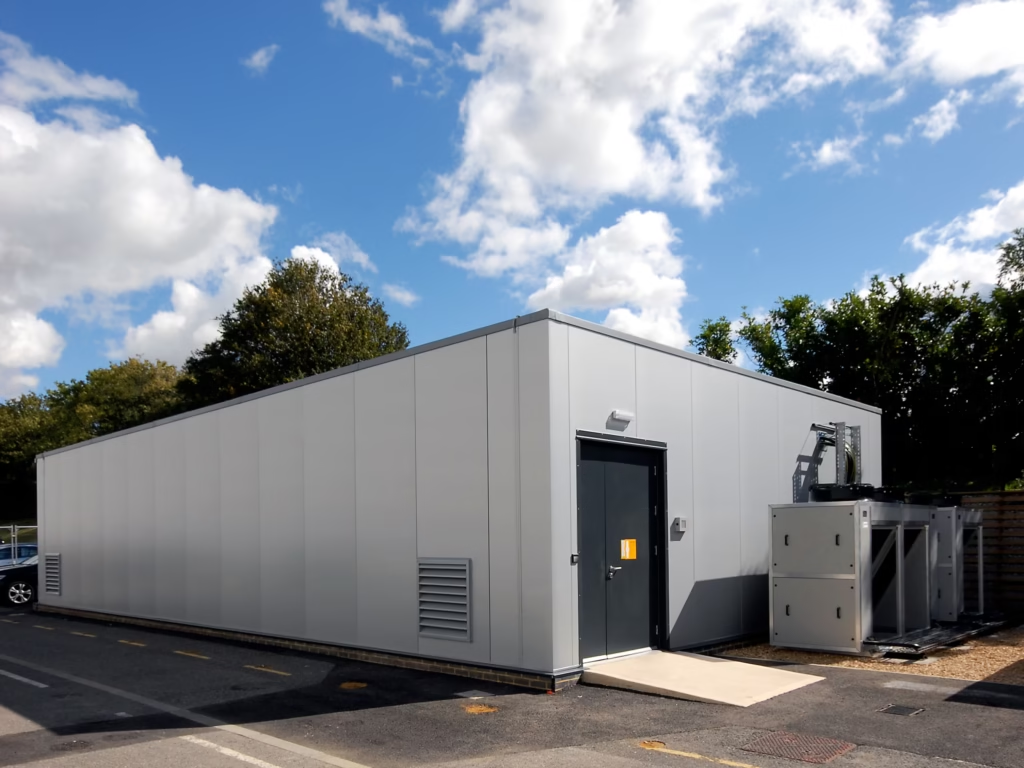
BladeRoom specialises in designing and delivering modular edge data centres tailored to the demands of Industry 4.0. Our solutions combine rapid deployment, operational efficiency, and sustainability, empowering businesses to thrive in a competitive landscape.